THE aRK JOURNAL / STYLE & GUIDANCE
How to Find Your Ring Size at Home: A Simple Guide
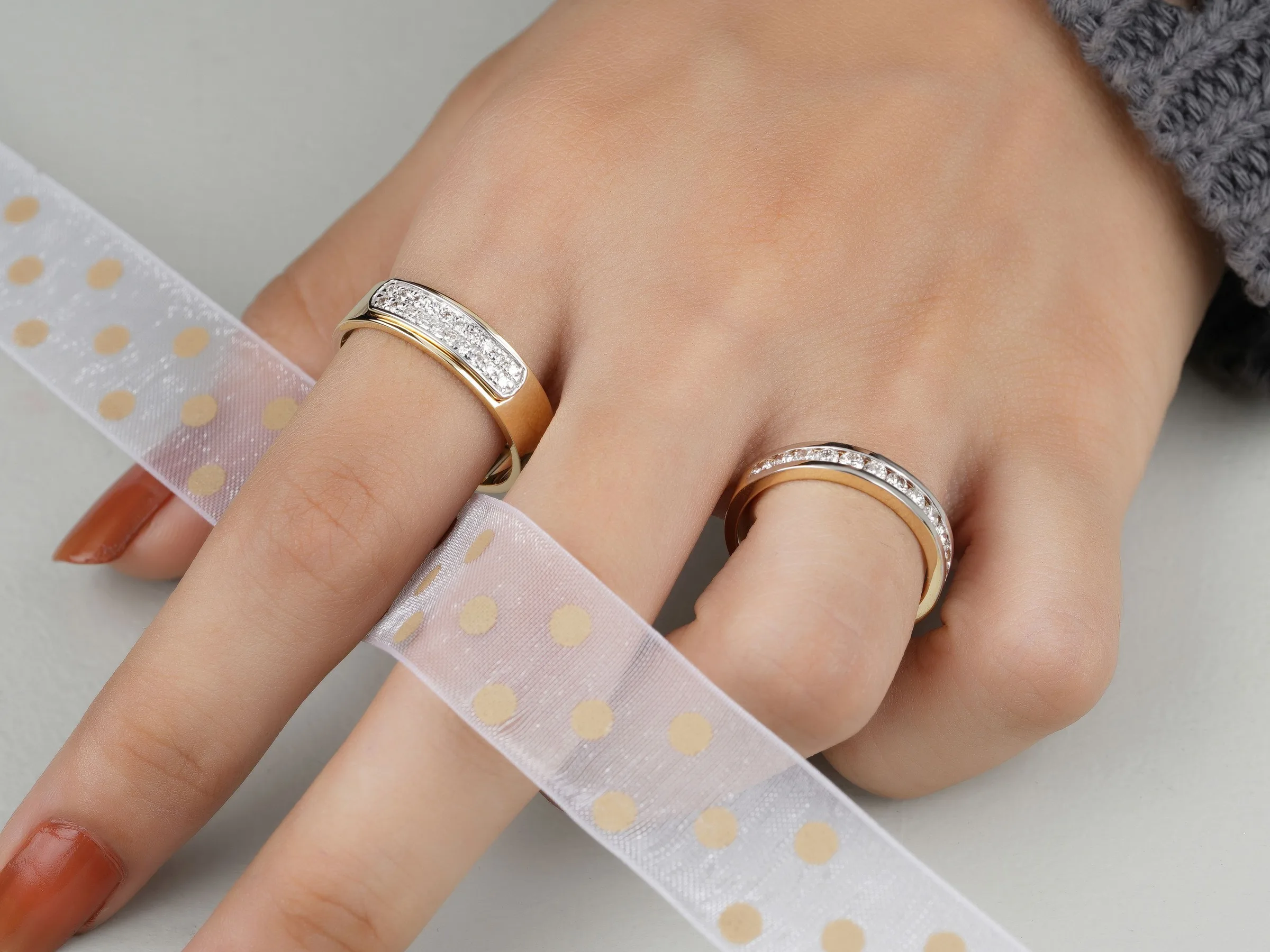
A ring that spins around your finger or leaves a dent at the end of the day isn't one you'll reach for often. Getting the size right is the least exciting part of buying a ring, and it matters more than anything else. The good news: you can find your size at home in about five minutes, and a few small habits make the result far more accurate.
- US ring sizes run from about 3 to 13 in half-size steps. Most women wear a 5 to 8, and most men wear an 8 to 12.
- Measure at the end of the day when your hands are warm. Fingers are smallest in the morning and in cold weather.
- Your ring has to slide over the knuckle. If your knuckle is larger than the base of your finger, size for the knuckle.
- Wide bands (6 mm and up) fit snugger, so go up a quarter or half size.
Three Ways to Find Your Ring Size at Home
1. Measure a ring you already own
This is the most reliable method. Pick a ring that fits the finger you're shopping for, lay it on a ruler and measure the inside diameter in millimeters, edge to edge, not including the metal. Then match it to the chart below.
2. Use a strip of paper
Wrap a thin strip of paper around the base of your finger, mark where it overlaps, then lay it flat and measure the length in millimeters. That's your circumference. Paper works better than string because it doesn't stretch. Measure two or three times and use the average.
3. Get professionally sized
If the ring is an engagement ring or a wide band, a jeweler's sizing set is worth the trip. It takes two minutes, and it's free at most jewelry counters.
US Ring Size Chart
- Size 4: 14.9 mm diameter, 46.8 mm circumference
- Size 5: 15.7 mm diameter, 49.3 mm circumference
- Size 6: 16.5 mm diameter, 51.9 mm circumference
- Size 7: 17.3 mm diameter, 54.4 mm circumference
- Size 8: 18.1 mm diameter, 57.0 mm circumference
- Size 9: 19.0 mm diameter, 59.5 mm circumference
- Size 10: 19.8 mm diameter, 62.1 mm circumference
- Size 11: 20.6 mm diameter, 64.6 mm circumference
- Size 12: 21.4 mm diameter, 67.2 mm circumference
Falling between two sizes? Each half size adds about 0.4 mm to the diameter. For a thin band, round down. For a wide band, round up.
Things That Change Your Fit
- Temperature: heat and humidity make fingers swell, and cold makes them shrink. A ring that's loose in January can feel tight in July.
- Time of day: fingers swell a little after salty meals, flights and workouts. Late afternoon is the best time to measure.
- Band width: a 2 mm stacking band and an 8 mm men's band in the same size won't feel the same. Wider metal covers more skin and feels tighter.
- Your dominant hand: fingers on your writing hand are often slightly larger. Measure the exact finger you'll wear the ring on.
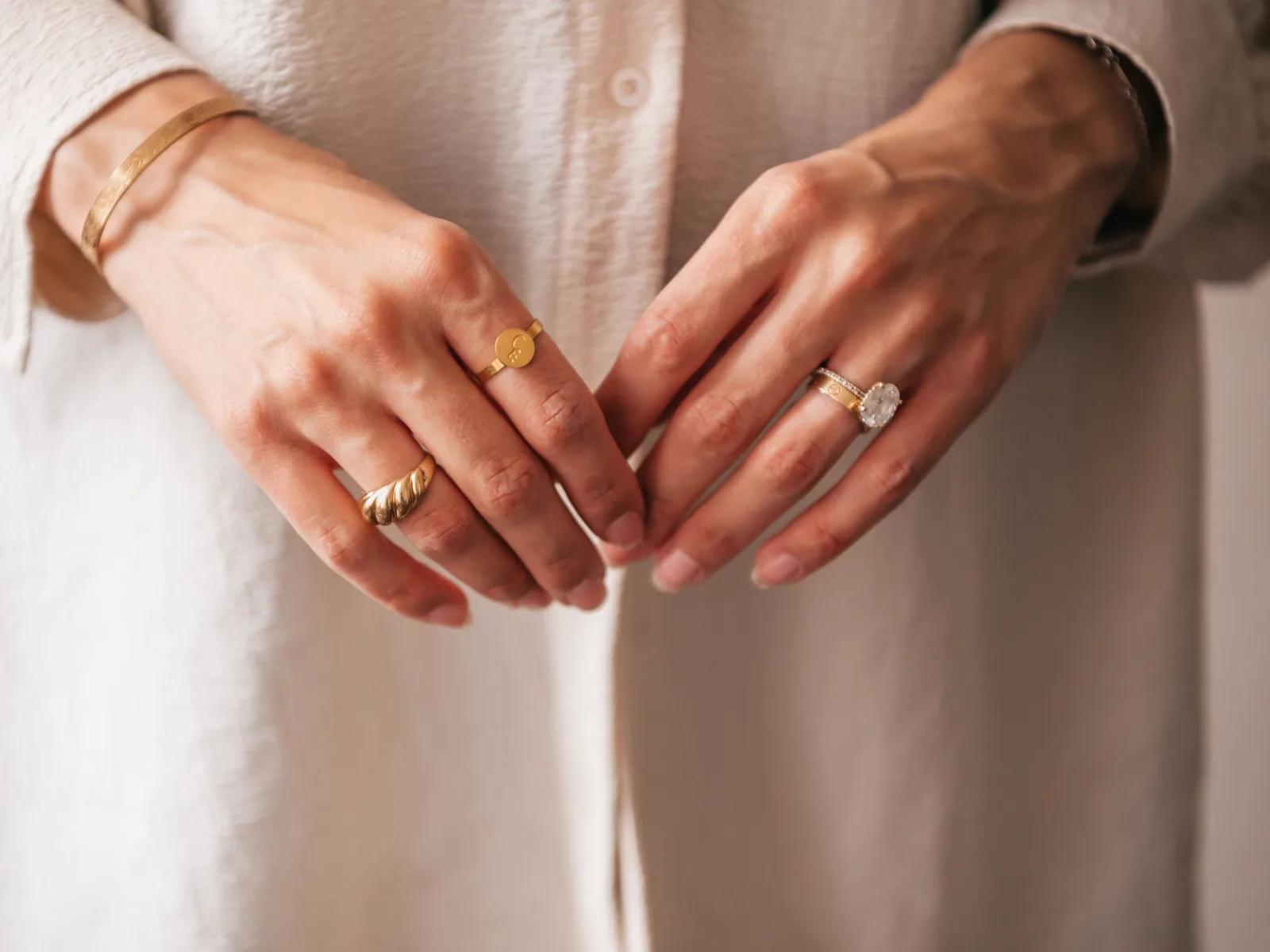
- Stacking: two or three rings on one finger feel tighter than any single band. Many people size up a quarter size for stacks.
Browse slim stacking bands, statement styles and solitaires in our rings collection.
Buying a Ring as a Gift
Borrow a ring they wear on the same finger for an evening and trace the inside on paper, or press it into a bar of soap for an impression. Asking a close friend or family member also beats guessing. If you have to guess, US women's rings sell most often in sizes 6 to 7, and a ring that can be resized is the safest choice. Most plain gold and silver bands can be resized one or two sizes, while eternity bands and some gemstone settings can't.
Short Summary
A ring that spins around your finger or leaves a dent at the end of the day isn't one you'll reach for often. Getting the size right is the least exciting part of buying a ring, and it matte
Ring Size FAQ
What is the average ring size for women in the US?
Between size 6 and 7. Size 6 is commonly quoted as the single most popular women's size.
What is the average ring size for men?
Between 9 and 10, with most men falling somewhere from 8 to 12.
Should a ring be tight or loose?
Snug, not tight. It should slide over your knuckle with a little resistance and not spin freely or leave a deep mark.
Is it better to size up or down?
If you're truly between sizes, size up slightly. A ring that's a little loose is easier to fix with a sizing bead than one that won't go over your knuckle.
Can a ring be resized?
Most solid gold, platinum and silver rings can be resized up or down about two sizes. Full eternity bands, tungsten and titanium usually can't, so measure carefully before buying those.
Banner photograph: Pexels. Thumbnail photograph: Pexels. In-article photograph: Pexels. Real photographs used under the Pexels License.
Related products & services
Explore pieces and guidance connected to this article.
Loading related pieces…
Related blogs
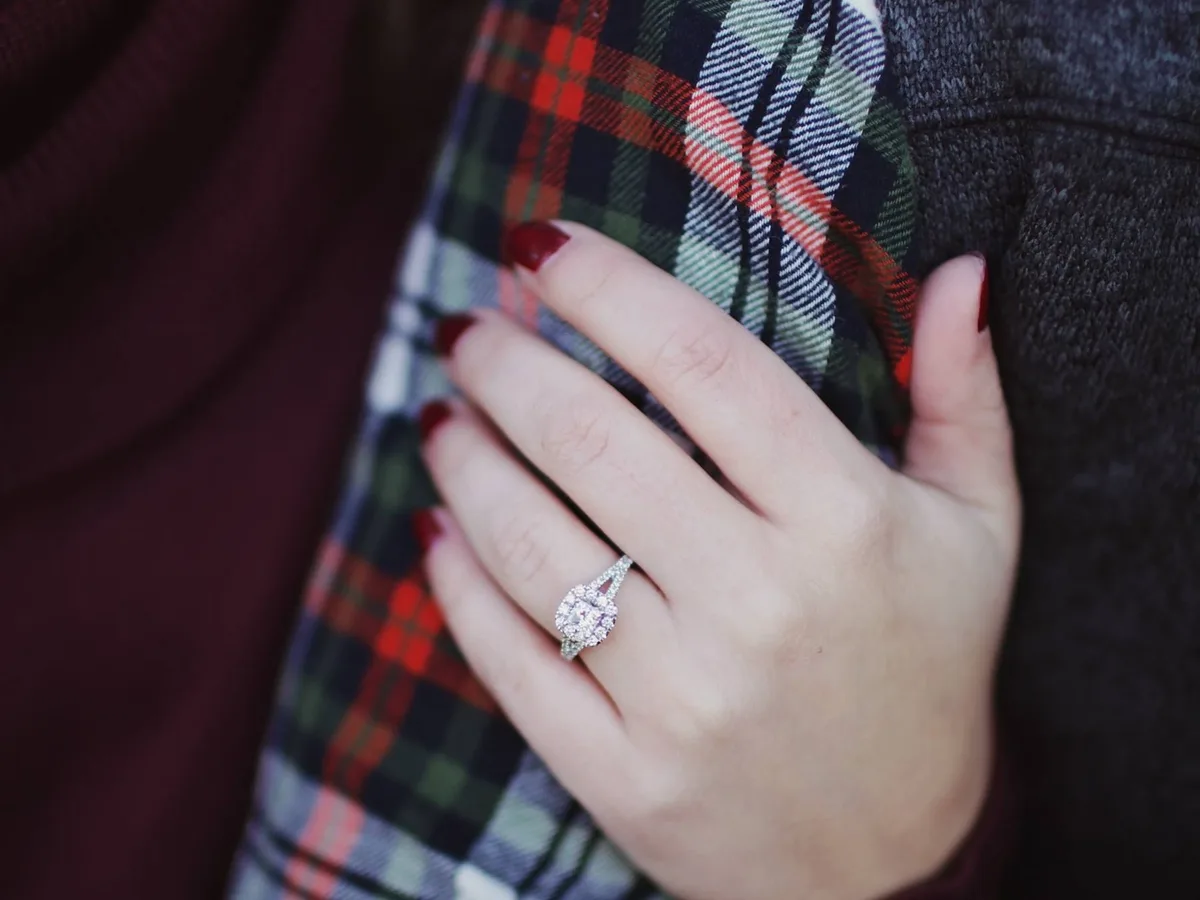
Engagement Ring Settings Guide: Prong, Bezel, Halo and Pavé Explained
Most engagement-ring shopping starts with the diamond. The setting, though, is what you see every time you look at your hand. It decides how big the stone looks, how much it catches on sweat
Read article →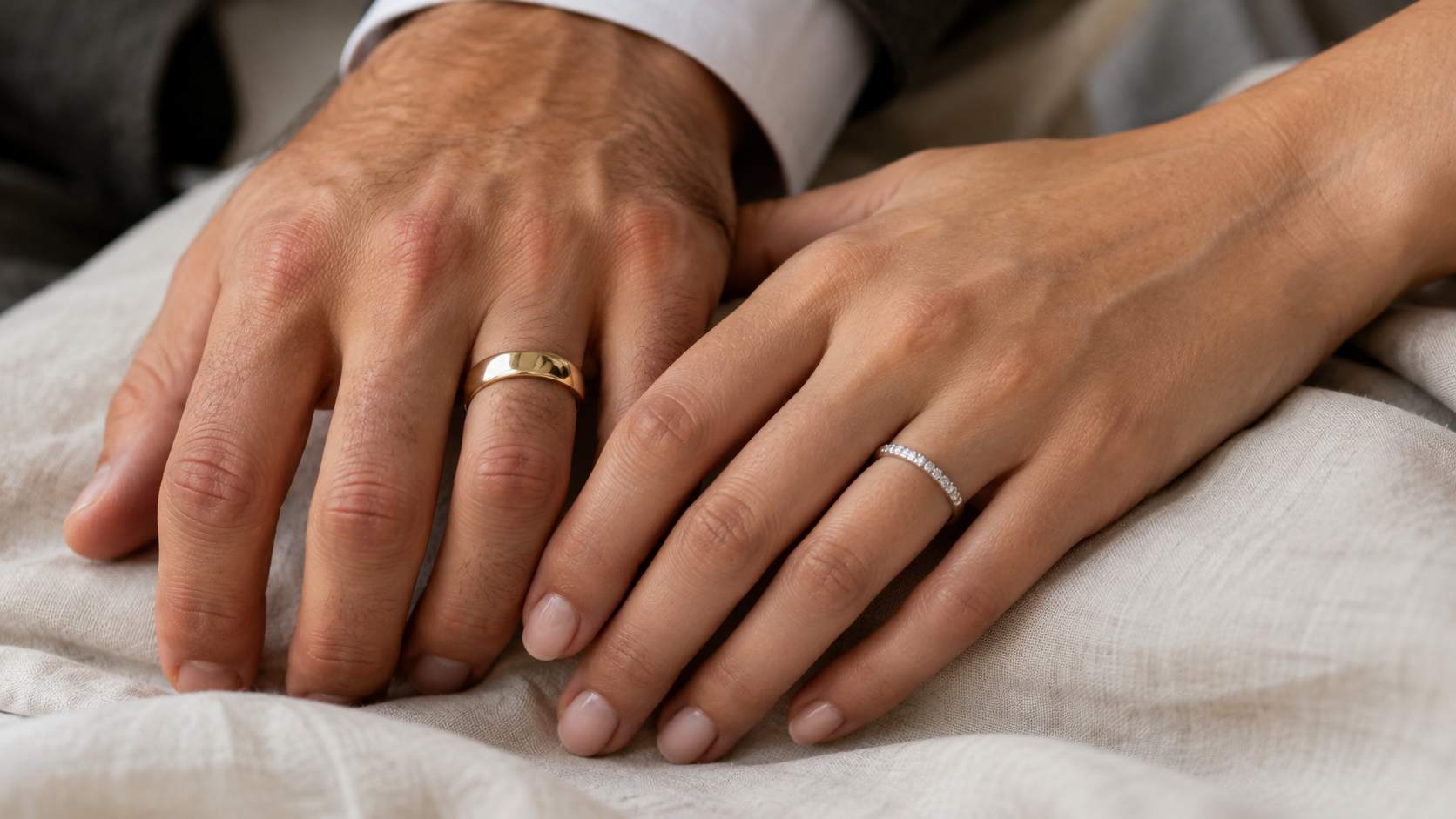
Should Your Wedding Ring Match Your Partner’s? A Modern Couple’s Guide
Choosing wedding rings is an exciting part of getting ready for marriage. For some couples, finding two rings with the same metal, finish, and design feels like the perfect way to celebrate
Read article →
Pearl Jewelry Guide: Types, Quality and How to Care for Pearls
Pearls used to mean one thing: a strand your grandmother wore to church. These days they turn up on paperclip chains, mismatched in a single ear, and stacked with gold. They're the only gem
Read article →