THE aRK JOURNAL / STYLE & GUIDANCE
Pearl Jewelry Guide: Types, Quality and How to Care for Pearls
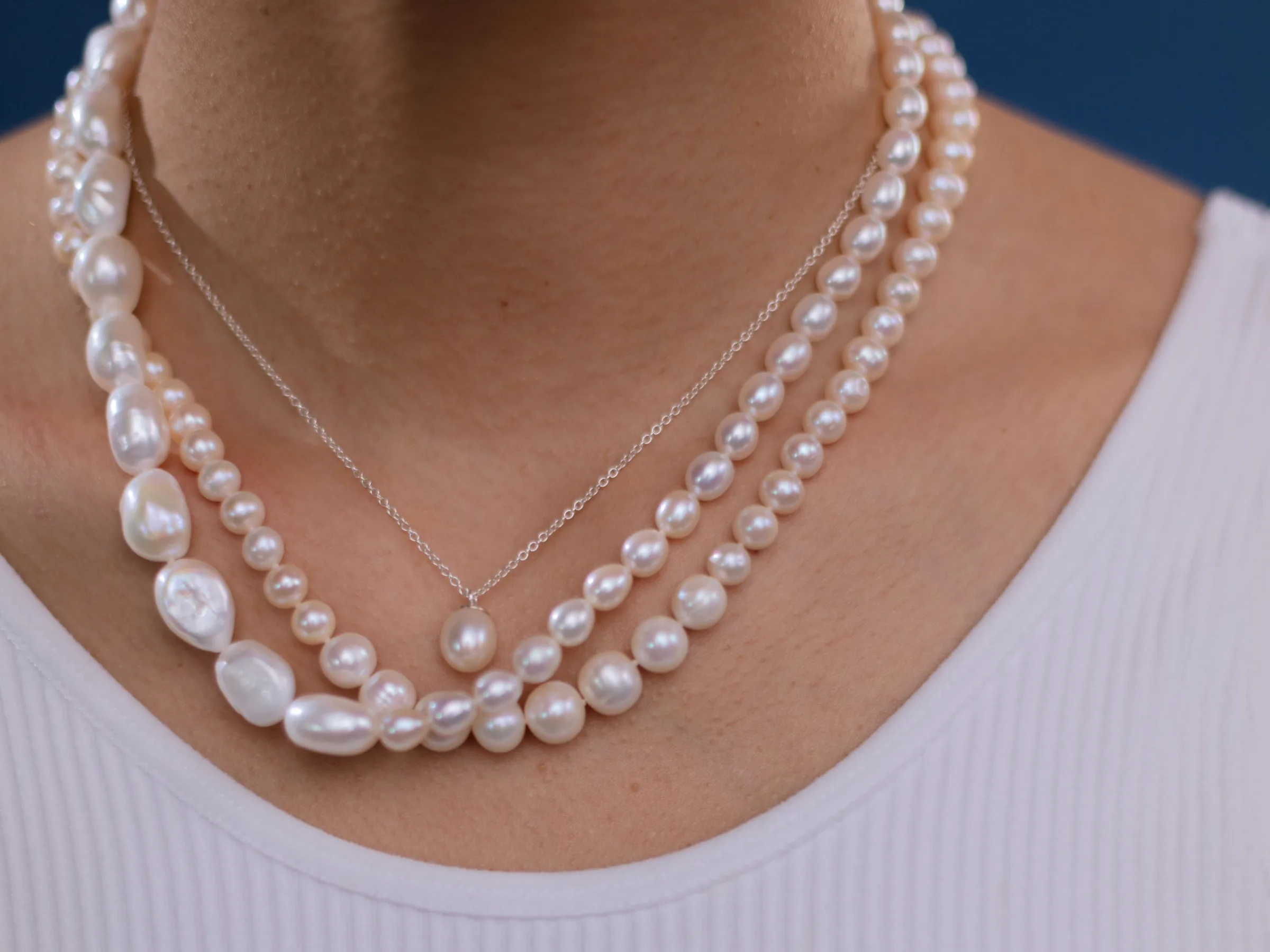
Pearls used to mean one thing: a strand your grandmother wore to church. These days they turn up on paperclip chains, mismatched in a single ear, and stacked with gold. They're the only gem made by a living animal, so they don't follow diamond rules. Here's what's worth knowing before you buy a pair of studs or your first strand.
- Most pearls sold today are cultured, not natural. That's normal, and it isn't a sign of a fake.
- Luster, meaning how sharp and bright the reflection on the surface looks, matters more than size.
- Freshwater pearls are the best value. Akoya, Tahitian and South Sea pearls cost more, and each has a distinct look.
- Pearls are soft. Put them on last, wipe them after wearing, and keep them away from perfume and hairspray.
Natural vs. Cultured: What You're Actually Buying
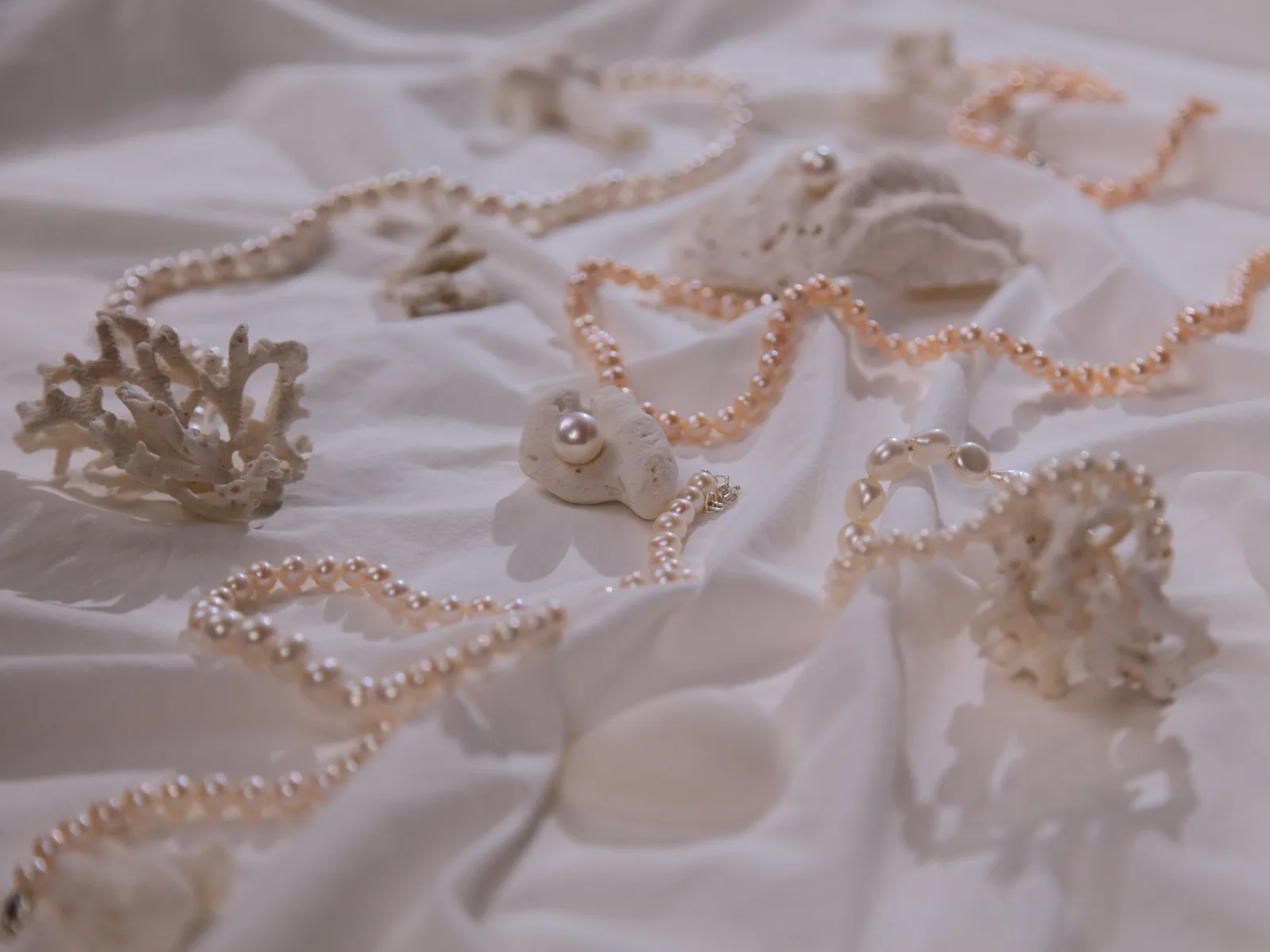
A natural pearl forms by accident when an irritant gets inside an oyster or mussel. These are so rare that most of them change hands at auction. A cultured pearl grows the same way, but a farmer places a small bead or piece of tissue inside the mollusk to start it. The nacre, which is the layered coating that gives a pearl its glow, is still made by the animal.
Imitation pearls are another thing entirely. They're glass or plastic beads with a painted coating. A quick home check is to rub two pearls gently against your front teeth. Real pearls feel slightly gritty. Imitations feel smooth, almost slippery.
The Four Main Pearl Types
- Freshwater: grown in mussels, mostly in lakes and rivers. They come in white, blush and lavender, often in slightly oval or baroque shapes. They're the most affordable and very durable, since they're usually solid nacre.
- Akoya: small saltwater pearls known for round shapes and a bright, mirror-like shine. This is the classic white strand.
- Tahitian: naturally dark pearls in charcoal, peacock green and aubergine tones. They look great with silver and white gold.
- South Sea: the largest and priciest, in white or deep golden shades, with a soft satin glow.
How to Judge Pearl Quality
Labs don't grade pearls on one universal scale the way they grade diamonds, but jewelers look at the same handful of traits.
- Luster: hold the pearl under a light. You should see a crisp reflection of the bulb, not a blurry glow. Chalky pearls look flat, and that's the trait to avoid most.
- Surface: small marks are normal. Pick pearls where any spots sit near the drill hole or the back.
- Shape: perfectly round pearls cost the most. Baroque pearls are irregular, they're often a better buy, and they look modern.
- Matching: on strands and earring pairs, the pearls should look alike in size, color and shine.
Choosing a Size and Style
For everyday studs, 6 to 7.5 mm reads polished without looking formal. A 16- to 18-inch strand sits at the collarbone and works with almost any neckline. If a full strand feels too dressy, try one pearl on a fine gold chain, or a pair of drop earrings you can wear with a T-shirt.
Caring for Pearls
Pearls rate about 2.5 to 4.5 on the Mohs hardness scale. That's soft enough that a bit of grit can scratch them, and acids in sweat, perfume and cosmetics slowly eat away the nacre.
- Put pearls on after makeup, hairspray and fragrance, and take them off first.
- Wipe them with a soft, slightly damp cloth after wearing. Skip ultrasonic and steam cleaners.
- Store them flat in a soft pouch, apart from harder jewelry. Hanging strands can stretch the silk.
- Have strands you wear often restrung every year or two, and look for knots between the pearls so you won't lose them all if the thread breaks.
Find Your Pearls
Ready to add some pearls to your collection? Browse our earrings for studs and drops, or look through our necklaces and pendants for a strand or a single pearl you'll wear every day.
Banner photograph: Pexels. Thumbnail photograph: Pexels. In-article photograph: Pexels. Real photographs used under the Pexels License.
Short Summary
Pearls used to mean one thing: a strand your grandmother wore to church. These days they turn up on paperclip chains, mismatched in a single ear, and stacked with gold. They're the only gem
No FAQs have been added to this article yet. Ask a jewelry specialist.
Related products & services
Explore pieces and guidance connected to this article.
Loading related pieces…
Related blogs
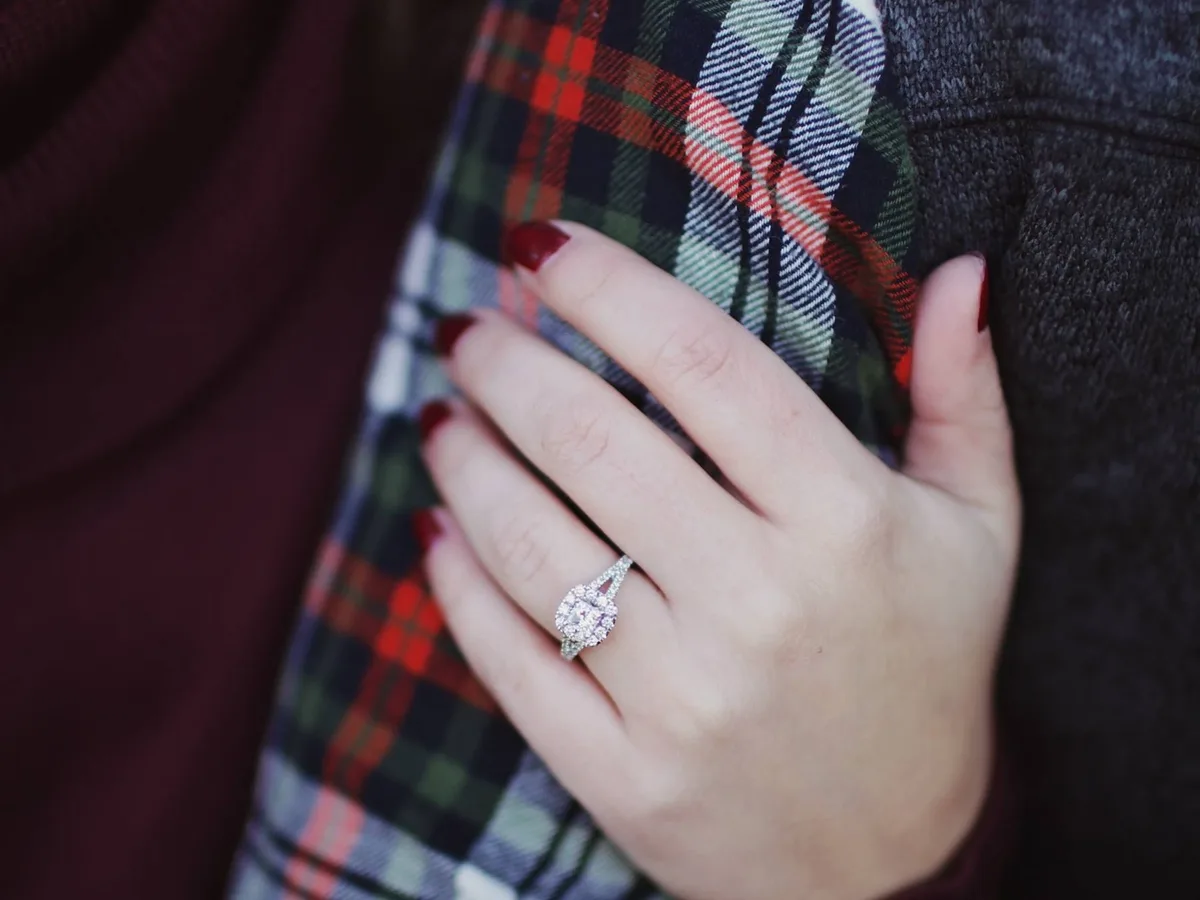
Engagement Ring Settings Guide: Prong, Bezel, Halo and Pavé Explained
Most engagement-ring shopping starts with the diamond. The setting, though, is what you see every time you look at your hand. It decides how big the stone looks, how much it catches on sweat
Read article →
Diamond Shapes Guide: How to Choose the Right Cut for Your Style
Ask ten people to describe their dream diamond and you'll hear about shape long before carat or clarity comes up. Shape sets the personality of a piece. A round brilliant feels classic, an e
Read article →
How to Find Your Ring Size at Home: A Simple Guide
A ring that spins around your finger or leaves a dent at the end of the day isn't one you'll reach for often. Getting the size right is the least exciting part of buying a ring, and it matte
Read article →